
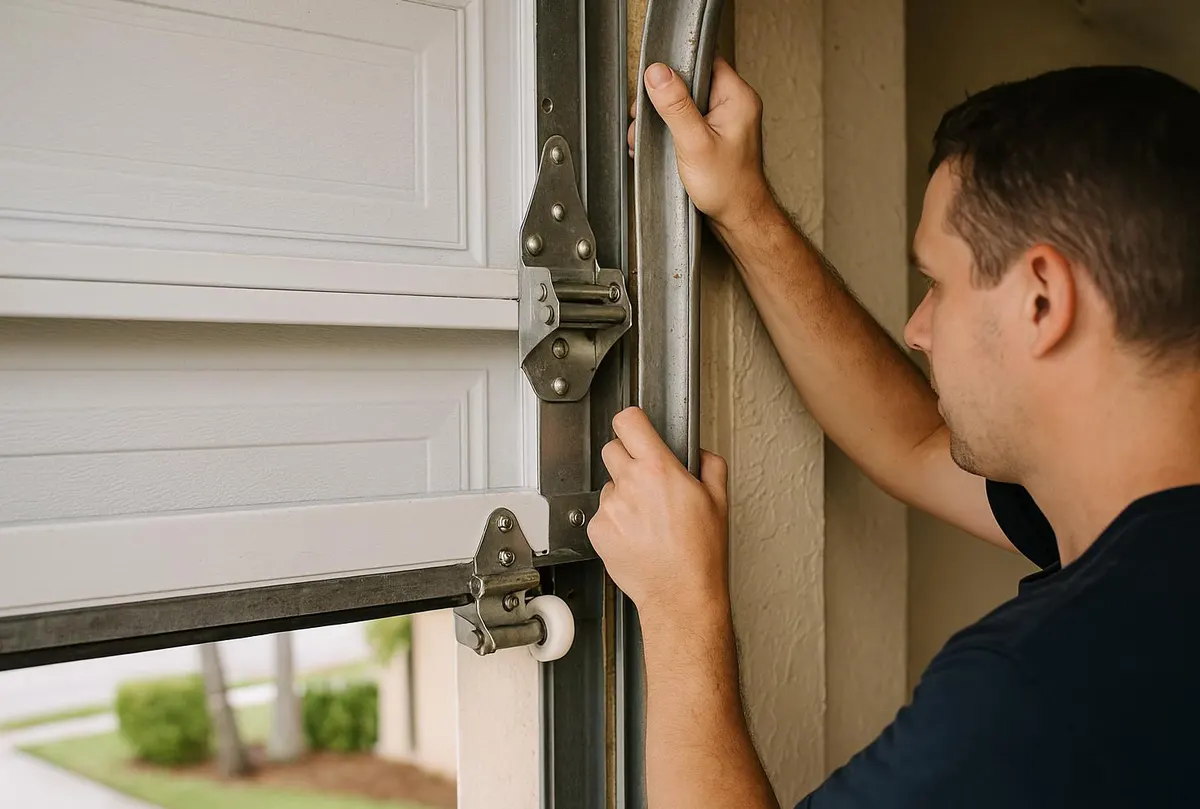
Rule of thumb: in the Las Vegas valley, a sluggish garage door on a cold morning is almost never actually frozen to the ground — it's thickened lubricant or a stressed spring reacting to the overnight temperature drop. The exceptions are homes at higher elevation like Pahrump or Boulder City, where nights can dip below freezing more often, and any driveway where sprinkler overspray or leftover monsoon runoff pools right at the base of the door. On those coldest nights, that puddle can genuinely freeze the bottom weather seal to the slab.
Symptoms to Watch For
- The door hesitates or stutters for the first foot of travel, then moves normally
- The opener motor strains, clicks, or hums without the door moving
- The door starts to close and reverses on its own partway down
- The door feels noticeably heavier when lifted by hand
- You hear grinding or squealing from the tracks that wasn't there in summer
- The bottom rubber seal looks stuck flush to the concrete, with no gap
Any one of these on its own is usually minor. Several at once, especially combined with a visibly sagging cable or a spring that looks stretched, is a sign to stop using the opener and call for an inspection rather than keep forcing it.
What a Technician Checks, in Order
1. The Bottom Seal and Slab Contact
First check is always the simplest: is the rubber astragal seal actually iced or just sitting tight against the concrete from dust and grime buildup? True ice-bonding is rare here, but it does happen after a cold, damp night. The fix is a bucket of warm (not boiling) water poured along the seal line to break the bond, never prying the door up with force, which can bend the bottom panel or pop the seal out of its track.
2. Lubricant Condition on Tracks, Rollers, and Hinges
This is the most common culprit in the valley. Summer heat breaks lubricant down and bakes it into a thin, dry residue on rollers and hinges. When temperatures drop at night, that residue thickens and stiffens, adding drag right at the start of the door's travel. A technician will wipe down the old buildup and reapply a silicone-based garage door lubricant, which holds up better across our wide daily temperature swings than household oils or WD-40, which actually attract more dust.
3. Roller and Hinge Condition
If lubrication alone doesn't smooth things out, the rollers themselves get inspected. Nylon rollers that have gone brittle from UV exposure, or steel rollers with worn bearings, get stiffer and noisier in the cold and won't glide the way they should even with fresh lubricant. Worn rollers get replaced; this is a straightforward swap during a maintenance visit and a good opportunity to upgrade to sealed-bearing rollers that handle temperature swings better.
4. Spring Tension
Metal contracts slightly in cold air, and a spring that's already near the end of its lifespan can lose just enough tension overnight to make the door feel heavier than usual or cause the opener to strain. This is also where a technician checks for visible gaps between spring coils, rust, or stretching, since a borderline spring under cold-weather strain is more likely to fail outright. Spring tension isn't something to adjust yourself; it's a high-tension repair that should be left to a trained technician with the right bars and clamps.
5. Opener Force and Limit Settings
If the door reverses on its own or the motor strains without visible resistance, the opener's force settings are checked next. Openers sense resistance and reverse as a safety feature, and if those settings were tuned during the heat of summer when the door moved more freely, they may now be too sensitive for the added drag of a cold morning. Recalibrating the force and limit settings usually resolves this without touching the door itself.
6. Opener Electronics and Battery Backup
Last on the list, because it's the least common issue here, is the opener's circuit board and battery backup. Our nights don't get cold enough to meaningfully affect most openers, but an older unit nearing the end of its life can show cold-weather symptoms as an early warning sign of a bigger electronics problem.
When to Call Las Vegas Garage Door Experts
If you've cleared the seal, the door still drags after lubrication, or you notice any gap or stretch in the spring coils, it's time to call. Our Garage Door Maintenance service covers a full lubrication, roller, and track inspection in one visit, which is exactly what most cold-weather sluggishness needs heading into the cooler months. If the issue turns out to be spring tension, our Spring Replacement service handles it safely with the right equipment, no DIY risk involved.
Whether you're near Skye Canyon, out in Summerlin, or anywhere else in the Las Vegas valley, give Las Vegas Garage Door Experts a call and we'll get your door moving smoothly before winter settles in for good.